If your leadership team keeps using the phrases "agile marketing" and "adaptive marketing" as if they mean the same thing, you are not alone. At We Marqetize we hear this confusion in nearly every strategy call, and getting the agile vs adaptive marketing distinction right is one of the fastest ways to stop wasting budget on the wrong fix. The short version: agile is about how your team works, and adaptive is about what your brand decides to do next. One is operational, the other is strategic, and the businesses that grow the fastest run both at the same time.
In this guide we break down what each approach really means, where they differ, and how a growing business in Pakistan or an international client can combine them without overcomplicating things.
What is agile marketing?
Agile marketing is an operating model. It borrows ideas from agile software development and applies them to how a marketing team plans, produces, and improves its work. Instead of waiting for a big quarterly launch, an agile team works in short cycles (often called sprints), ships small pieces, measures the result, and uses what it learns to decide what to build next.
The payoff is practical and measurable. Agile teams reduce long lead times, catch problems earlier, and make priorities visible so the dreaded "urgent request at 5pm" culture fades. For a lean marketing team in Islamabad juggling SEO, paid ads, and social content, agile simply means moving with intention on a predictable rhythm rather than lurching from one fire to the next.
Agile marketing tends to show up as:
- Weekly or biweekly sprint planning with a clear, prioritised backlog
- Running several ad creatives at once and optimising on performance
- Short stand-ups so everyone knows what is moving and what is blocked
- A test-and-review routine that turns results into the next decision
What is adaptive marketing?
Adaptive marketing is a strategic approach. It is about how your brand changes its messaging, channel mix, and customer experience in response to the outside world. Those signals might be a shift in buying behaviour, a competitor move, a new platform, a seasonal swing, or a change in what customers expect from you.
Where agile asks "how do we execute faster?", adaptive asks "what should we do differently to stay relevant to customers right now?" That is why adaptive work is usually customer-facing. A classic example is a retailer that notices buyers shifting online and pivots from a shop-first model to a direct-to-consumer and e-commerce push, or a brand that leans into sustainability messaging because its audience started caring about it.
Adaptive marketing is less of a formal methodology and more of a controlled learning system: you plan, launch, observe, adapt, and scale, so the brand stays aligned with reality instead of changing for the sake of it.
Agile vs adaptive marketing: how they actually differ
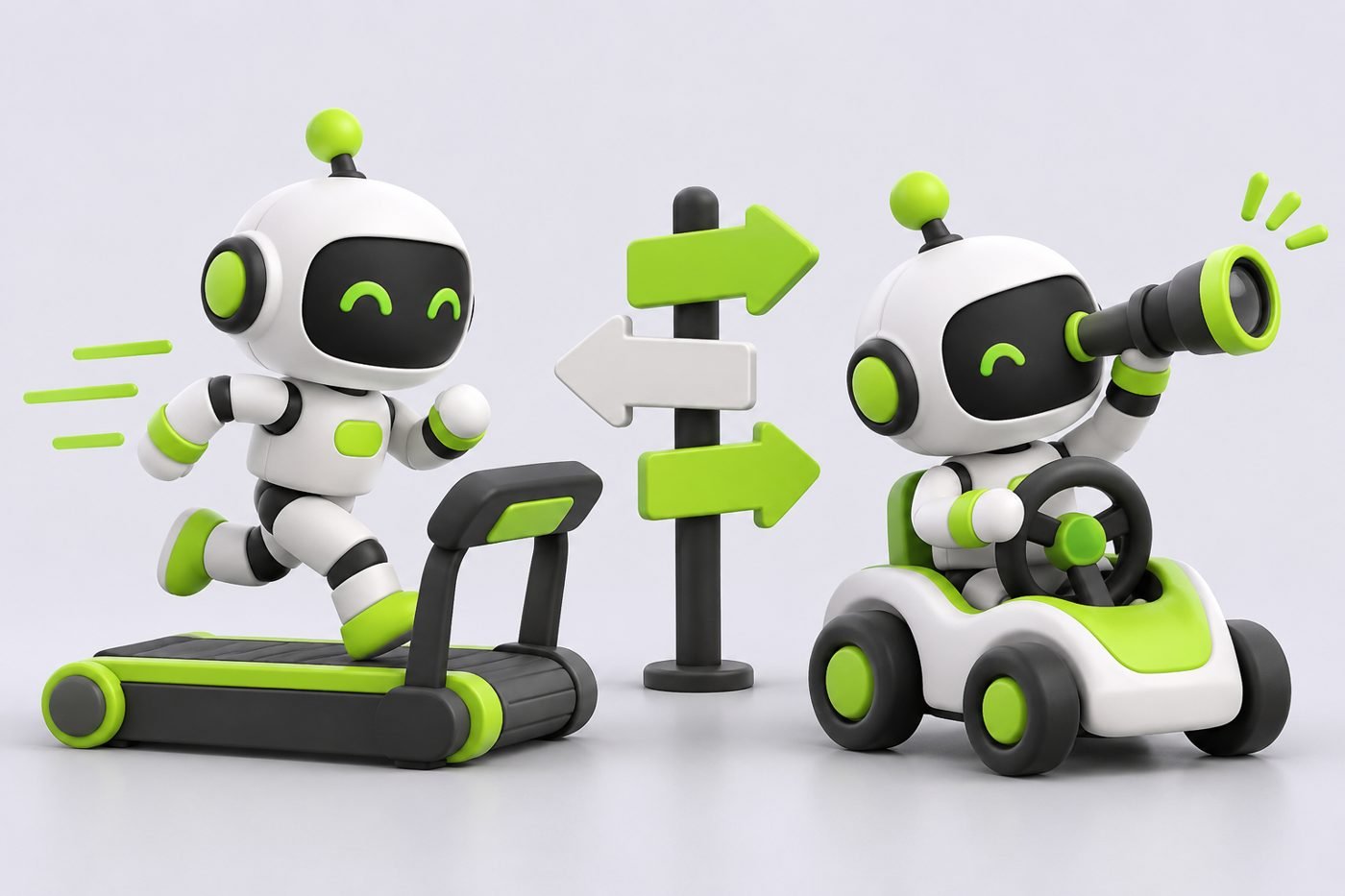
The clearest way to see the difference is to compare them across the dimensions business owners care about. Think of agile as the delivery engine and adaptive as the navigation system that decides where the engine should point.
| Factor | Agile Marketing | Adaptive Marketing |
|---|---|---|
| Core question | How do we execute faster with less waste? | How do we stay relevant as conditions change? |
| Nature | Operational: how work gets done | Strategic: what the brand should do next |
| Focus | Speed, throughput, continuous testing | Customer and market alignment |
| Scope | Sprints, intake, prioritisation, reporting | Messaging, channel mix, lifecycle, experience |
| Success looks like | Faster cycle time, more experiments, reliable delivery | Better engagement, conversions, and retention by segment |
| Main risk | Moving fast in the wrong direction | Knowing what to change but being too slow to ship it |
Why the two get confused
The confusion happens because both approaches value speed, iteration, and learning. The difference is simply where that learning gets applied. Agile applies it to your internal workflow. Adaptive applies it to the customer-facing strategy. A team can absolutely be agile without being adaptive: it can ship quickly every week while still following a fixed strategy that the market has quietly moved past. That is the trap we see most often. The work looks busy and the dashboards look healthy, but the brand is optimising a plan that no longer fits what customers want.
Here is a simple way to align your stakeholders in a meeting. Ask one question:
- If the real problem is "we execute too slowly and inconsistently", start with agile.
- If the real problem is "we are losing relevance as customer behaviour shifts", start with adaptive.
- If both are true, which is usually the case, you need the two working together.
How agile and adaptive work together
The real answer to the agile vs adaptive marketing debate is that these two approaches are complements, not competitors. Adaptive decides what should change and why; agile gives you the cadence to actually deliver that change and measure it. A strong digital marketing strategy sets the adaptive direction, and an agile operating rhythm turns that direction into shipped work without waiting for a quarterly reset.
In practice the loop looks like this: customer signals point to a needed change, your team runs quick experiments to test the new approach, the winning version improves the experience, and that generates fresh signals. This is also where conversion rate optimization earns its keep, because the experiments that validate an adaptive decision live inside your landing pages, funnels, and journeys. On the channel side, social media marketing and content teams carry those adaptive calls into the market where customers actually feel them.
At We Marqetize we see this balance matter most for our clients in Islamabad and across Pakistan who run lean teams. You do not need a 30-person department to be both agile and adaptive. You need a clear strategy, a weekly rhythm, and the discipline to change course when the data (not the loudest opinion in the room) tells you to. Modern tooling helps too: the industry research summarised by HubSpot consistently shows teams leaning on automation and AI to shorten the time between spotting a signal and shipping a customer-facing update.
A practical starting point for Pakistani businesses
If you are building this from scratch, do not try to roll out a full framework in month one. Start with a two-week sprint cadence and a single shared backlog so your team gets the agile muscle working. In parallel, pick two or three customer signals you will actually watch, for example cost-per-lead from paid campaigns in PKR, which blog topics are pulling organic traffic, and which offers convert for each audience segment. Review those signals every sprint and let them drive what you change next. That is adaptive strategy and agile delivery feeding each other, without jargon or expensive software. If you want a deeper look at keeping content aligned with shifting intent, our guide to an adaptive content strategy is a useful companion read.
Frequently Asked Questions
What is the main difference between agile and adaptive marketing?
Agile marketing is operational and changes how your team plans, executes, and learns in short cycles. Adaptive marketing is strategic and customer-facing, changing how your brand responds to real-time signals like customer behaviour and market shifts. Agile is the delivery engine; adaptive decides what that engine should deliver.
Can a team be agile without being adaptive?
Yes, and it is a common pitfall. A team can run tight sprints and ship quickly while still following a strategy that the market has outgrown. Being adaptive means using live signals to change customer-facing decisions, not just executing the same plan faster.
Which should a small business in Pakistan start with first?
Most small teams benefit from starting with agile because it creates a reliable rhythm and reduces chaos. Layer adaptive thinking on top quickly, though, so your faster execution is pointed in the right direction rather than just producing more of the wrong thing.
Do I need expensive software to do this?
No. You can run agile with a simple shared backlog and a weekly planning habit, and you can be adaptive by tracking two or three meaningful customer signals. Tools help you scale later, but the discipline matters more than the stack.
How do agile and adaptive marketing improve results together?
Together they close the loop between insight and action: adaptive strategy identifies what to change based on customer signals, and agile delivery ships and measures that change fast. This reduces the cost of slow marketing and keeps your brand aligned with what customers actually want.
Ready to align strategy with execution?
If your team is moving fast but you are not sure it is moving in the right direction, that gap between agile delivery and adaptive strategy is usually the reason. We help businesses in Pakistan and international clients build a marketing engine that does both. Book a free 15-minute strategy call with our team, or learn more about our work as a digital marketing agency in Islamabad, and we will help you turn signals into action without the guesswork.